Table of Contents
There’s increasing reliance on hydrogen peroxide-scavenger masterbatches in aseptic dairy caps to neutralize residual oxidants and protect product flavor; you will learn how additive selection, masterbatch concentration, dispersion, and molding parameters influence residual levels and sensory outcomes. You’ll also get guidance on analytical methods, migration limits, and processing best practices to achieve regulatory compliance and consistent taste without compromising cap performance or shelf life.
Unpacking Hydrogen Peroxide-Scavenger Masterbatch: Applications in Dairy Packaging
- Definition and Composition of Peroxide-Scavenger Masterbatch
You’ll find peroxide-scavenger masterbatches are concentrated additive blends (typically 20–40% active ingredient) dispersed in a carrier polymer like LDPE, LLDPE or EVA, formulated for food-contact use under FDA/EU rules. Active chemistries often include phosphite or sulfite-based scavengers and stabilizers chosen for thermal stability to withstand extrusion/injection molding (180–240°C). Typical final dosing in caps, liners or films ranges 0.1–2.0 wt% to neutralize residual H2O2 without compromising polymer properties.
- Key Applications: Caps, Liners, and Multilayer Films
You’ll deploy these masterbatches primarily in screw caps (PP/HDPE), foil or polymer liners (LDPE/EVA/PET) and inner PE layers of multilayer aseptic films to intercept peroxide diffusing from sterilized product surfaces. Pilot trials show >85% peroxide reduction; for example, 1.0 wt% dosing in a cap reduced residual H2O2 from ~30 ppm to <3 ppm, cutting sensory risk and protecting milk proteins from oxidation.
Application strategy matters: you can concentrate scavenger in the inner liner for targeted neutralization or in the cap body for broader protection, while in multilayer films placing the masterbatch in the inner PE tie or sealant layer ensures fast reaction kinetics. Expect to validate through migration and sensory testing, monitor processing at 180–230°C for additive stability, and confirm seal integrity and torque remain within spec after incorporation.
The Science Behind H₂O₂ Sterilization and Its Residual Effects
H₂O₂ sterilization applies strong oxidative chemistry to inactivate microbes, with common industrial stock solutions ranging from 3–35% and surface application doses that often yield residuals in the single-digit ppm if not controlled; you manage efficacy versus residuals by adjusting contact time, temperature and organic load, and by using rinses, catalytic decomposition or scavenger masterbatches to protect sensory quality and regulatory compliance.
- Mechanism of Hydrogen Peroxide Sterilization
Molecular action centers on direct oxidation of membrane lipids and proteins plus generation of hydroxyl radicals via Fenton-like reactions when trace iron is present, causing DNA strand breaks and rapid cell death; you get faster inactivation at higher temperature and lower organic load, while catalase enzymes and metal surfaces accelerate decomposition to water and oxygen, a pathway you can exploit to remove residues.
- Implications of Residual H₂O₂ on Product Integrity
Residual peroxide can oxidize unsaturated milk lipids and sensitive vitamins like riboflavin, generating metallic, cardboard or sour off-notes and accelerating rancidity, with sensory panels often detecting changes at very low ppm levels; you must consider both free residuals and peroxide trapped in polymer matrices that can release over shelf life, affecting taste and shelf stability.
Analytical approaches you can deploy include peroxidase-based colorimetric assays, iodometric titration and electrochemical sensors, with routine targets commonly set below 1–5 ppm depending on product and regulation; combining a peroxide-scavenger masterbatch (typical loadings 0.5–2%) with a post-sterilization catalytic rinse has been shown in industrial trials to lower measurable residuals and restore expected sensory profiles and pack performance.
Extrusion-Compatible Additive Chemistries: A Closer Look
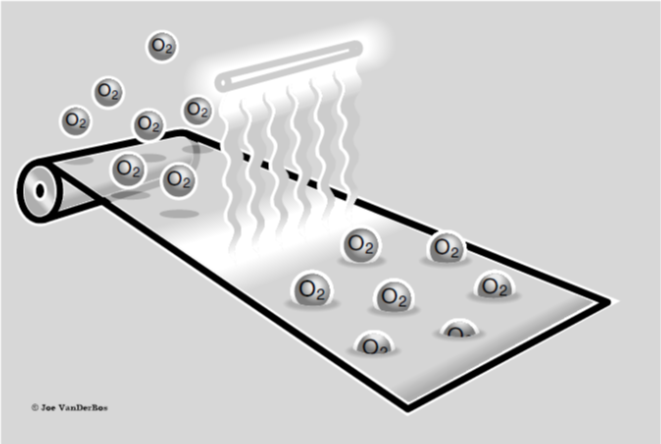
You evaluate additives against typical melt profiles (PP 200–230°C, HDPE 180–210°C), favoring chemistries that retain peroxide-scavenging activity after shear and heat. Organophosphites, thioethers, sterically hindered phenolics and selected chelators are commonly used in masterbatches at 0.5–3 wt% to balance scavenging with cap performance. Monitor thermal half-life, volatility and interactions with pigments or catalysts during scale-up.
- High-Level Overview of Surviving Additives
Organophosphites and thioethers perform well because they react stoichiometrically with peroxides and withstand short exposures to 200–230°C. Sterically hindered phenolic antioxidants provide secondary protection by slowing radical propagation. Chelators such as EDTA/IDA mitigate metal-driven peroxide decomposition; their loadings are typically low (0.1–0.5 wt%) to avoid affecting polymer crystallinity or migration.
- Selection Criteria for Effective Use
You should prioritize thermal stability above your processing peak, confirmed reactivity toward H2O2, regulatory compliance for food contact, low sensory impact and minimal effect on rheology or sealability. Target masterbatch levels that give measurable peroxide reduction without exceeding migration limits; typical evaluation metrics include residual peroxide, oxidative induction time and cap torque after sterilization.
You validate candidates by running bench extrusion at production temperatures, measuring residual H2O2 via iodometric titration or peroxide test kits and checking sensory panels for off-taste at relevant concentrations. Aim for additive retention >80% after extrusion and peroxide reductions that bring residues below your product-specific sensory thresholds. Also perform accelerated aging and migration testing (EU 10/2011 or FDA guidance) to confirm long-term compliance and taste neutrality.
Optimizing Dosing and Structural Placement for Maximum Efficacy
Target masterbatch loadings between 40–60% active scavenger and final dosing of 0.3–1.5 wt% in the closure polymer for most aseptic caps; you balance scavenging capacity against melt viscosity and seal performance. Choose carrier compatibility (PP body vs PE liner) and adjust dosing upward if the scavenger sits farther from the product headspace. Test-run pilot batches at 500–1,000 pieces to quantify residual H2O2 and taste impact before scale-up.
- Recommended Dosing Ranges
Use masterbatch concentrations of 40–60% active; if your masterbatch is 50% active, dosing 0.4–1.2 wt% delivers ~0.2–0.6 wt% active scavenger in the final part. For especially high peroxide loads (initial headspace residues >5 ppm), consider 1.5–2.0 wt% masterbatch but monitor melt flow and torque. Keep laboratory confirmation with GC or colorimetric assays after 24–72 hours to verify residuals below 0.5 ppm.
- Strategic Placement: Closure vs. Inner Layer
Placing scavenger in the inner sealing layer gives you the fastest H2O2 uptake and typically allows 30–50% lower dosing versus distributing it through the closure body. If you add scavenger only to the body, expect to increase masterbatch by 0.5–1.0 wt% to compensate for diffusion distance; that can affect stiffness and ejection. Co-injected multilayer designs often hit the best trade-off between efficacy and mechanical properties.
When you co-inject a PE sealing layer (20–50 µm) onto a PP cap, select a PE-compatible carrier masterbatch and dose 0.5–1.0 wt% into that inner layer for rapid headspace scavenging. In a production example, a dairy line using a 30 µm LDPE liner with 0.8 wt% masterbatch (50% active) reduced residual H2O2 from ~4 ppm to <0.3 ppm within 48 hours without altering torque or taste, while placing the same masterbatch in the PP body required ~1.5 wt% to match results.
Essential Testing Protocols: Ensuring Quality and Safety
You should establish a QC matrix combining chemical, sensory, and mechanical checks: residual H₂O₂ assays, trained sensory panels, and seal/torque monitoring. Set targets such as residual H₂O₂ <0.5–1.0 ppm for finished bottles, sample at-line every production shift for new lots and daily for stable lines, and keep traceable records for at least 12 months to support root-cause analysis and regulatory audits.
- Methods for Measuring Residual H₂O₂
Use validated extraction (50 mL DI water rinse per cap, 60 s agitation) followed by KI/starch colorimetry (LOD ≈0.1 ppm) or UV spectrophotometry at 240 nm (LOD ≈0.02–0.1 ppm) for lab QC; enzymatic peroxidase kits deliver specificity and LOD ≈0.01 ppm for confirmatory tests. Consider inline amperometric sensors for continuous monitoring and reference AOAC/ISO methods for method validation and documentation.
- Conducting Organoleptic Checks and Seal/Torque Verifications
Run trained sensory panels of 10–12 assessors using triangle or difference-from-control tests with blinded spikes (e.g., 0.1, 0.5, 1.0 ppm H₂O₂) to detect off-notes; accept ≤10% panel detects an off-flavor. Measure cap torque with a calibrated digital torque tester at 10 samples/hour, target typical dairy cap torque 0.5–2.5 N·m, and perform seal integrity tests (vacuum decay, dye ingress) per applicable ASTM/ISO standards.
Validate sensory sensitivity by spiking pilot bottles at known concentrations and documenting detection thresholds; keep panel training records and monthly requalification. For torque, record mean, SD and perform CAPA if >10% samples fall outside spec; for seal integrity, follow protocol trigger levels (e.g., any leak) that require immediate line hold and 100% inspection until corrected.
Navigating Interactions: Peroxide-Scavenger with Oxygen-Scavenger and Color Masterbatches
You must balance scavenger chemistries, pigment reactivity, and processing to preserve flavor and barrier performance; typical dosing ranges are 0.5–2.0 wt% peroxide-scavenger and 1–3 wt% oxygen-scavenger for PP caps processed at 200–240°C. Lab screening combining peroxide titration (permanganate method), accelerated shelf tests (40°C, 7–14 days) and sensory panels often reveals synergistic or antagonistic effects that only emerge under realistic fill and storage conditions.
- Understanding Compatibility Challenges
Metal-oxide peroxide scavengers (e.g., cerium, manganese oxides) can catalyze oxygen-scavenger activation or degrade organic colorants; TiO2 may promote peroxide breakdown under UV exposure while organic pigments can oxidize and migrate, causing off-taste. You should watch for premature activation during compounding—high shear and 220–240°C residence can consume scavenger capacity—and monitor residual H2O2, with industry targets commonly below 5 ppm after 24–48 hours.
- Strategies for Effective Integration
Use a compatibility matrix: test masterbatches in pairs at representative dosing (0.5%, 1%, 2%) and run DSC, FTIR, and permanganate assays. You can mitigate interactions by choosing inert pigment grades (surface-treated TiO2, organic lakes), encapsulated scavengers, staggered dosing (blend oxygen-scavenger in liner, peroxide-scavenger in cap), and adding stabilizers like 0.1–0.5 wt% hindered phenol antioxidants during compounding.
For implementation, perform bench-scale twin-screw compounding with 30–90 s residence at target melt temperature, measure residual peroxide immediately and after 24–72 hours, and include sensory testing after simulated sterilization (e.g., 1,000–2,000 ppm H2O2 rinse). If you observe >20% extra peroxide consumption during compounding, switch to coated scavengers or reduce thermal exposure; document results in a failure-mode matrix and iterate until residual H2O2 and taste metrics meet your specification.
Compliance Essentials: Regulatory Framework and Documentation
- Residual Limits and Their Significance
Regulation (EC) No 1935/2004 and Regulation (EU) No 10/2011 set the performance backdrop for plastic caps, with an overall migration limit of 10 mg/dm² (equivalent to 60 mg/kg) and substance-specific SMLs where listed. You should target hydrogen peroxide residuals in finished aseptic caps below common manufacturer thresholds of 0.1–0.5 mg/kg to avoid off-flavors and sensory detection; many OEMs specify non-detectable H2O2 by validated methods as a contractual requirement.
- Importance of Migration Testing and Record Keeping
Standardized migration tests (EN 1186 series for EU, appropriate FDA protocols for US) and analytical methods such as LC‑MS/MS or GC‑MS provide detection limits down to 0.01–0.1 mg/kg, while iodometric titration or peroxide assays give quick batch screening with LODs near 0.1 mg/kg. You must document test conditions (simulant, temperaturе, time), method validation, LOD/LOQ and COAs to demonstrate compliance during audits and customer reviews.
Operate a pragmatic sampling and retention plan: verify every new masterbatch or resin lot, re-test after tooling or process changes, then run periodic surveillance (e.g., monthly for three months, then quarterly). Keep raw data, chromatograms, COAs, traceable lot numbers and shelf‑life challenge reports in a searchable archive for audit windows and customer requests; include corrective action records when limits approach specification to show due diligence.
Final Words
In summary, employing a hydrogen peroxide-scavenger masterbatch for aseptic dairy caps minimizes residual H2O2 and safeguards your product’s flavor; however, it is essential to validate scavenger load, cap compatibility, processing conditions, and storage to avoid off-notes. Establish routine residual testing, sensory panels, and documented QC limits to guarantee adherence and a consistent flavor. By optimizing the formulation and application of masterbatch, you can protect shelf life and ensure consumer acceptance.