Table of Contents
The Global Filler Masterbatch Market size is expected to reach $588.9 million by 2030, rising at a market growth of 7.1% CAGR during the forecast period. Picking the right masterbatch is kind of like choosing between a rock and a hard place—do you want your plastic stiff as a board, or are you just trying to bulk it up without breaking the bank? This guide breaks down all that jazz: the weird science behind particle shapes, which fillers “play nice” with your resin, and when you should reach for CaCO₃, or talc.
There’s the lowdown on what happens to things like density, shrinkage and how your parts will actually look when they pop out of the mold. You even get a price breakdown for when you want equal stiffness. At the end, there’s a no-nonsense checklist, with real-world examples—think bottle caps, crates, or those beefy appliance panels. Basically, it’s the cheat sheet you wish you had the first time you got stuck picking a filler.
Defining Characteristics: Stiffening vs Filler Masterbatch
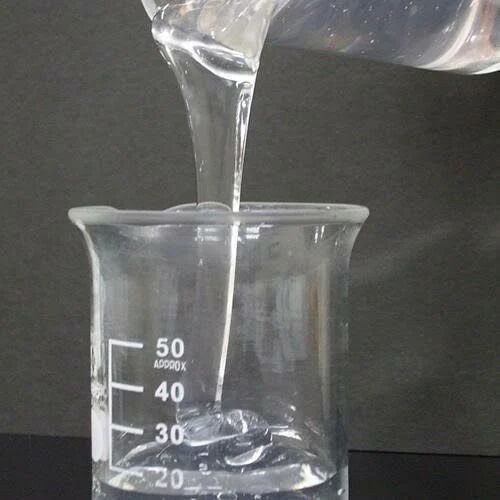
Stiffening agents are high-aspect additives—talc platelets, glass fiber, engineered hybrids—aimed at raising flexural modulus and rigidity with efficient stress transfer through coupling chemistry; filler masterbatches are concentrated mineral-in-polymer dispersions (CaCO₃, talc, engineered blends) you dilute into resin to control cost, shrinkage, density, and surface. Particle shape and size matter: talc platelets (≈5–30 µm, aspect ratio 5–20) orient to boost stiffness, while CaCO₃ (≈0.5–3 µm) fills and lowers shrinkage but needs higher loading for equal modulus.
- Core Functions and Desired Outcomes
You choose stiffening agents when high modulus and dimensional stability are primary—appliance housings and heavy-duty crates often use talc or short glass fiber for +20–60% flexural modulus; filler masterbatches serve cap and commodity parts where cost reduction, consistent surface and shrinkage control matter, typically at 10–40 wt% CaCO₃. Expect viscosity increase and potential mattifying; mitigate with MAPP or silane coupling, optimized screw geometry, higher back-pressure, and reduced residence time to keep cycle times acceptable.
- Chemical Composition and Performance Metrics
Masterbatches pair a carrier polymer (PP/PE) with 50–90% mineral load plus dispersants and coupling agents; stiffening agents may be untreated or surface-modified talc, CaCO₃, glass fiber or engineered particles. Evaluate by flexural modulus gain per wt%, density delta (CaCO₃/talc ≈2.7 g/cm³), shrinkage reduction (often up to 30–50% at high filler levels), and surface gloss/impact trade-offs. Talc usually gives greater modulus per phr than CaCO₃, while CaCO₃ yields lower material cost but may need ~20–30% higher loading to match stiffness.
Platelet fillers? They line up with the flow—bam, stiffer parts. Fine, round CaCO₃? That stuff keeps shrinkage down and cranks up the shine. But hey, don’t just grab any old filler; surface-treated versions or a bit of MAPP go a long way for better stick and less cracking (trust me, you’ll thank yourself later). Heads up though: load up your mix and suddenly melt viscosity goes up, plus you’ll get more gunk in the die. Solution? Play with your heat zones, vent like you mean it, and get a twin-screw running smooth.
Quick cheatsheet: caps like 10–25% CaCO₃ masterbatch; crates and appliance bits? They’re happier in the 15–35% talc or some fancy blend zone. Don’t forget to actually run through your priorities: what stiffness do you need, how heavy is too heavy, does the part need to look pretty, how much warping can you live with, can your machines even handle the mix, and—let’s be real—what’s it gonna cost per notch of stiffness? It’s a lot, but that’s the game.
Particle Dynamics: Size, Shape, and Their Role
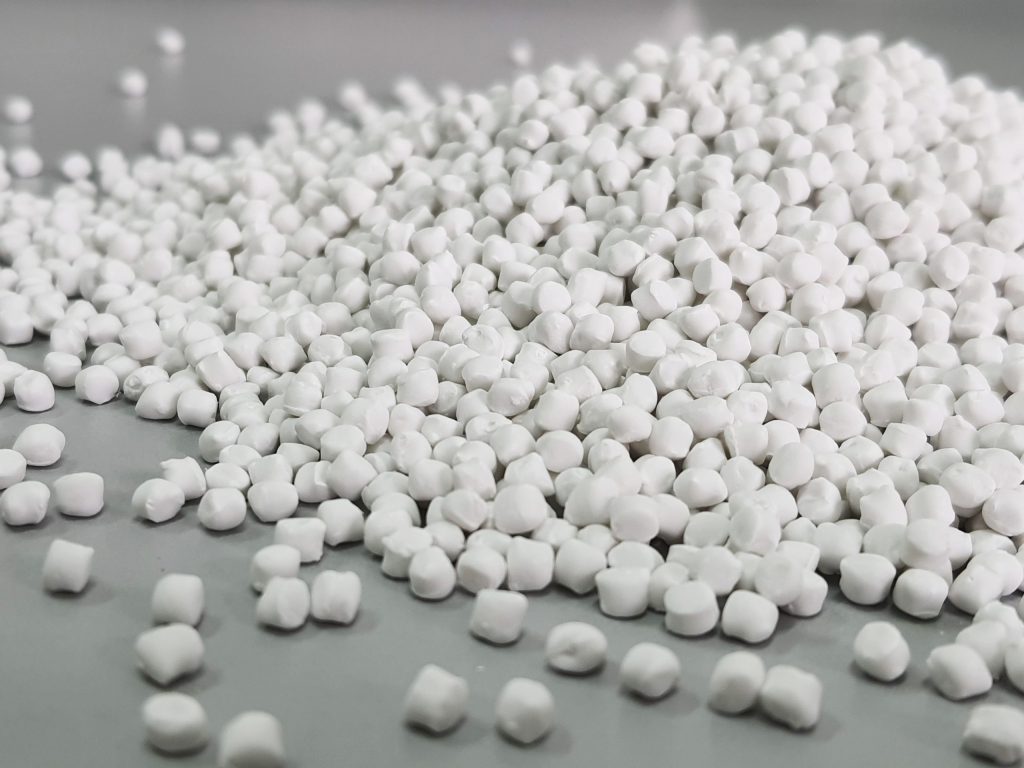
Your filler choice and particle morphology set the baseline for density, shrinkage, and surface quality: CaCO₃ (≈2.7 g/cm³) typically comes as equiaxed 0.5–5 µm particles that preserve gloss at low loadings, while talc (≈2.8–2.9 g/cm³) appears as platelets with aspect ratios from ~5 to 50 that boost stiffness and reduce mold shrinkage. You’ll balance particle size against processing penalties—finer particles raise viscosity and die pressure, larger or high‑aspect particles can improve modulus per weight but risk surface roughness.
- The Influence of Particle Geometry on Material Properties
Platelet talc delivers higher flexural modulus per wt% and better dimensional control, so you’ll see 20–30 wt% talc used in appliance housings and crates to cut shrinkage and warpage; equiaxed CaCO₃ often requires 30–40 wt% to match that stiffness but maintains better cap gloss at 10–20 wt%. You should expect platelet fillers to lower shrinkage and density slightly more effectively, while fine ground CaCO₃ gives the lowest cost per kg for modest modulus gains.
- Coupling Mechanisms and Their Effectiveness
Alright, let’s talk about surface treatments and compatibilizers—stuff like stearates, titanates, zirconates, silanes, and yeah, that old workhorse PP-g-MA for polyolefins. These components are basically the secret weapon for better stress transfer. They help keep your fillers from bailing out when things get tough, so you can actually hit your modulus goals without cramming in as much filler. Less is more, right?
You can get the same stiffness with, what, 10–30% less filler? Not bad at all. Makes you wonder why anyone’s still doing it the hard way. Matching coupling chemistry to filler and matrix matters: PP‑g‑MA pairs well with polar talc and CaCO₃ in polypropylene, while silanes/titanates suit mineral surfaces and engineered blends with higher surface energy. You should prefer pretreated filler masterbatches for injection‑molded caps and thin‑wall closures to preserve surface and cycle time; for crates or thick appliance parts, on‑line addition of titanate‑treated talc can optimize stiffness vs cost without excessive melt viscosity.
Material Choices: Selecting the Right Additive
Your additive selection should map to target stiffness, density, and surface requirements: choose fine, sub-3 µm CaCO₃ for low-cost stiffening with minimal haze on caps, platy talc (10–30 µm, AR 10–50) to maximize modulus per wt for crates and structural appliance parts, or engineered blends with 2–4% coupling agents to balance impact, shrinkage, and surface. Expect density increases of ~0.05–0.2 g/cm³, shrinkage reductions, and plan for 5–15% throughput hits unless you optimize screw geometry and processing temps.
- Going Beyond the Basics: When to Use CaCO₃, Talc, or Engineered Blends
If you’re just trying to save some cash while bumping up stiffness in thin parts or caps, CaCO₃ is your friend—throw in 20–30% by weight, and you’ll get a decent kick in stiffness plus a nice, glossy finish. Not earth-shattering, but hey, it works. Now, if you’re chasing serious flexural modulus (think: those tough crates), talc’s the way to go. Even at just 10–20% loading, you can jack up modulus by 30–60%.
Downside? You might end up with parts that’re stiffer in one direction than the other—so, watch out for that anisotropy mess. But if life’s more complicated (when isn’t it?), and you’ve gotta juggle surface quality, density, impact resistance, and you can’t let costs balloon, try a cocktail: maybe 10–15% CaCO₃, 5% talc, and a splash (2–3%) of coupling agent. That blend can hit your target properties and costs, without you having to pick just one filler and hope for the best.
- Customizing Performance for Specific Applications
You tune formulations by matching particle shape and coupling to the part: use sub-3 µm hydrophobic CaCO₃ for glossy caps to preserve flow and finish, align platy talc in thicker walls for crate stiffness in the machine direction, and apply 2–3% maleic-grafted compatibilizer in appliance housings to retain impact while raising modulus by 40–60%.
For practical development you should run a short design-of-experiment: set target flexural modulus and allowable impact loss, screen filler particle sizes (sub-3 µm CaCO₃, 10–30 µm talc) and 2–4 coupling chemistries (silane, maleic graft), then evaluate density, sink, cycle time, and surface. Expect 5–15% cycle-time penalty unless you increase barrel temps, switch to higher-shear screws, or use pre-dispersed masterbatches; CaCO₃ commonly delivers 10–30% lower material cost to reach equal modulus versus talc, while engineered blends let you hit surface and shrinkage specs for caps, crates, and appliance parts without sacrificing cost targets.
Performance Implications: Density, Shrinkage, and Surface Quality
Adding 30 wt% CaCO₃ to PP typically raises part density from ~0.90 to ~1.13 g/cm³ (≈25% increase) while cutting linear shrinkage by 30–60%; talc (platelet aspect ratio >10:1) at 10–20 wt% gives larger shrinkage and warpage reduction along flow and better heat deflection with similar density change. Fine CaCO₃ (<1 µm) improves gloss and packing, coarse (5–10 µm) mattes the surface. You can offset higher viscosity and screw wear with MAPP coupling, stearates, or modified processing; caps, crates, and appliance housings show these trade-offs in practice.
- Evaluating the Trade-offs in Material Behavior
You balance cost, density, and surface: CaCO₃ is usually lowest-cost per modulus target, talc delivers higher stiffness-per-wt via platelet reinforcement so you need less filler, and engineered blends (hollow glass, microspheres) cost more but can cut part weight 10–30%. Particle shape controls anisotropy—talc reduces longitudinal shrinkage and warpage; spherical CaCO₃ gives isotropic dimensional control. Expect higher melt torque and some impact loss; mitigate with lubrication, narrower particle-size distribution, or optimized screw profiles.
- Long-term Effects on Product Longevity and Appeal
You’ll see fillers alter fatigue, creep, and surface durability over years: properly coupled talc-filled PP often reduces long-term creep by 10–40% and preserves paint adhesion and gloss; uncoupled CaCO₃ can raise stiffness but may promote microvoiding and stress-cracking under cyclic load. UV- and chemical-stabilizer choices interact with filler surface treatment to determine appearance retention and service life for consumer parts.
Case examples: caps with 15 wt% fine CaCO₃ saved ~12% material cost and kept dimensional accuracy but required a primer to restore gloss; crates with 30–35 wt% CaCO₃ achieved stiffness targets and reduced warp to <0.5 mm at the cost of ~20% higher part mass; appliance panels with 15–20 wt% talc held warpage under 0.2 mm, improved paintability, and extended service life. Use your decision checklist—modulus target, allowable density, surface spec, processing limits, and cost—to pick filler strategy.
Navigating Processing Challenges: Penalties and Solutions
High filler loads raise melt viscosity, increase die pressure, and lengthen cycle times—30 wt% talc in PP often increases injection cycle by 5–15% and can worsen surface matte and gate freeze. You can offset density and shrinkage gains (CaCO₃ ~2.7 g/cm³) by using surface-treated fillers, 1–3 wt% coupling agents (MAPP for PP), or engineered blends that combine fine CaCO₃ (d50 1–5 µm) with hollow microspheres to hit modulus targets while trimming weight, cost, and processing penalties.
- Identifying Common Processing Issues
You’ll see increased filter loading, screw torque spikes, and die drool with angular talc platelets (high aspect ratio), while spheroidal CaCO₃ tends to flow better but raises part density. Surface roughness, sink marks, reduced impact strength and higher warp appear as filler content rises; caps often lose gloss at >15 wt% filler, crates show bent corners from differential shrinkage, and appliance housings can blister unless venting and mold temperature are adjusted.
- Strategies for Mitigating Adverse Effects
Use 1–3 wt% MAPP on PP or silane-treated fillers for engineering resins, choose CaCO₃ d50 ~1–5 µm for improved flow, and opt for engineered blends to meet modulus with lower filler loading—engineered blends can be 10–30% costlier but cut density and shrinkage. Adjust screw geometry, increase barrel temperature 10–20°C to lower viscosity, and add 0.5–1.5 wt% processing aid to reduce die build-up and cycle time penalties.
Run small-scale trials: start with 10–15 wt% CaCO₃ plus 2 wt% MAPP for caps to preserve gloss while boosting stiffness; for crates, test 20–30 wt% talc with platelet aspect ratio ~5–15 and mold temps of 40–60°C to control warp. Consider hybrid masterbatches—50:50 CaCO₃:talc or CaCO₃ with hollow glass microspheres—to hit equal-modulus targets while lowering part mass and shrinkage; track torque, pressure, and surface Cpk during validation to quantify trade-offs.
Cost-Effectiveness: Achieving Modulus Targets Without Breaking the Bank
Talc’s platy morphology often hits a given flexural modulus at 10–25% lower loading than CaCO₃, so you can meet stiffness targets with less added material and lower density/shrinkage impact; engineered masterbatches (glass or hybrid mineral blends) will cost 20–60% more per kg but can cut required filler loading and scrap rates. Use 1–2 wt% coupling (e.g., PP-g-MA) to boost efficiency, and factor processing energy, cycle time and surface finish into your true cost-per-part.
- Analyzing Financial Implications Across Different Additives
Compare at equal modulus: CaCO₃ typically offers the lowest raw cost per kg but requires higher loadings (often +8–15 wt%) versus talc to reach the same modulus, raising density and potential processing penalties; talc reduces loading and sink/warp, so material cost can be 10–30% higher but net part cost often falls. Engineered blends justify 15–40% premium by lowering scrap, trimming, and secondary operations in caps, crates and appliance parts.
- Real-world Applications: Cost vs. Performance in Action
Caps and thin-walled closures benefit from low-density CaCO₃ at 20–30 wt% for cost and acceptable surface, but require tighter coupling and fine grades to avoid roughness; crates and structural trays favor talc or talc-rich blends (20–35 wt%) to hit stiffness with less shrinkage; appliance bezels use engineered blends to keep aesthetic surfaces while meeting modulus and impact trade-offs.
Case study details: a beverage-cap compound switching from 35 wt% CaCO₃ to 26 wt% talc preserved dimensional stability and raised flexural modulus from ~2.2 GPa to ~2.6 GPa, cutting scrap by ~2% and reducing cycle time ~4%, which offset a ~12% higher filler cost; similarly, an appliance housing using a glass-mineral masterbatch trimmed wall thickness 8–12% and saved assembly costs that outweighed the 30–50% higher compound price.
Conclusion
So, here’s the deal: grab a stiffening agent if you care about things holding their shape and not flexing all over the place. If you’re more worried about saving cash or bulking stuff up, that’s when you go for a filler masterbatch. The nitty-gritty—like how tiny or weirdly shaped the particles are, or how well they bond to your plastic—totally affects how tough your part turns out and whether it looks slick.
Picking between CaCO₃, talc, or some other blend? It’s all about what you want on density, warping, and looks. Sure, there are headaches with processing, but honestly, that’s what coupling agents and tweaking your cycle time are for. Once you’ve matched the stiffness, start eyeing the price tag.