Table of Contents
A concentrate of stiffening additives, like talc, dissolved in a carrier polymer is called a stiffening agent masterbatch. It increases the stiffness and rigidity of plastic products, such as films and injection-molded parts, without appreciably increasing their weight. Manufacturers can increase the mechanical qualities of materials like polypropylene (PP) and polyethylene (PE), achieve consistent rigidity, and prolong product lifespan by combining this masterbatch with raw polymer during processing.
The Science of Stiffening Agent Masterbatch: Beyond Conventional Fillers

Look, if you wanna crank up the stiffness without making your material pack on the pounds, swap for slick engineered stiffeners or those fancy masterbatches everyone’s raving about. Toss in some glass fiber—say, 10 to 20 percent by weight—and boom, you’re looking at double the tensile modulus.
Or, if you’re feeling high-tech, sprinkle in a tiny bit of cellulose nanocrystals (we’re talking 1 to 5 percent) and you’ll snag a 20 to 50% jump in stiffness without your density even noticing. These days, everyone’s all about high-aspect-ratio particles, nanoparticles with souped-up surfaces, and polymer stiffeners that hit the sweet spot: more stiffness, but your parts still bend instead of shatter.
- Defining Stiffening Agents vs. Fillers and Nucleators
You should distinguish: fillers (talc, CaCO3 at 10–40 wt%) primarily cut cost or control shrinkage; nucleators (sorbitol, sodium benzoate at 0.05–0.5 wt%) accelerate crystallization improving HDT and modest stiffness; stiffening agents (glass/mineral fibers, nanocellulose, organoclays, or rigid polymer modifiers delivered via masterbatch at 2–20 wt% equivalent) are engineered to raise modulus per unit weight while minimizing density penalties.
- The Mechanism of Rigidity Enhancement
You achieve rigidity through load transfer from the polymer matrix into stiff inclusions, formation of percolating networks at critical volume fractions (often 5–15% for high-aspect fillers), and increased crystallinity via nucleation; processing-induced orientation during injection molding can multiply stiffness along flow direction, and interfacial adhesion determines how much of the stiffness potential is realized.
You can optimize performance by controlling interfacial chemistry—silanes, maleic anhydride grafts or ionic compatibilizers raise interfacial shear strength and thus effective modulus. For example, a 10 wt% glass-fiber masterbatch with good coupling can raise flexural modulus 150–250%, whereas 3 wt% nanocellulose with good dispersion gives 20–40% gains. Monitor melt viscosity increases (often +20–100% depending on loading) to avoid processing issues that reduce orientation and negate stiffness benefits.
Selecting the Right Resin: Compatibility and Applications

Match resin polarity, melt temperature and target modulus to your stiffening masterbatch: PP typically processes 180–230°C with flexural modulus targets 1,200–3,000 MPa, HDPE at 150–200°C with lower crystallinity; talc or CaCO3 at 5–20% can boost stiffness 20–150% depending on particle aspect ratio, while glass fiber at 10–30% can push modulus above 3,000 MPa. You should run DSC, rheology and short-beam tests to validate dispersion, shrinkage and impact trade-offs before scaling.
- Polypropylene (PP) and High-Density Polyethylene (HDPE) Compatibility
PP and HDPE are nonpolar and accept mineral fillers well, but phase behavior differs: PP tolerates talc or glass fiber with maleic-anhydride-grafted PP (1–3%) to improve adhesion, while HDPE benefits from higher shear for dispersion and often needs PE-grafted compatibilizers for polar additives. You should match filler size (10–50 µm talc vs. 10–20 µm CaCO3), control melt index (PP MI 2–12, HDPE MI 0.2–4) and adjust screw profiles to avoid agglomerates that harm impact strength.
- Real-World Applications of Stiffening Agents
Thin-wall PP food containers commonly use 5–8% talc masterbatch to raise flexural modulus ~40–60%, enabling 8–12% wall-thickness reduction; automotive interior panels often use 10–30% glass-fiber masterbatch to reach 3,000–8,000 MPa and meet OEM stiffness specs; HDPE crates and pallets use 5–12% CaCO3 to reduce deflection under load while keeping density near 0.95–0.98 g/cm³. You should align filler type with end-use performance and recyclability targets.
Testing under real conditions matters: perform ISO 178 flexural, Izod impact and long-term creep at expected service temperatures (e.g., −20 to 80°C for outdoor parts). You will find PCR content tolerances drop with high glass-fiber loads, so keep mineral fillers below ~20% for easier recycling streams, and add UV stabilizers for outdoor furniture or agricultural films where stiffness must persist after 1,000+ hours of xenon or UV-B exposure.
Key Performance Metrics: Understanding Material Strength
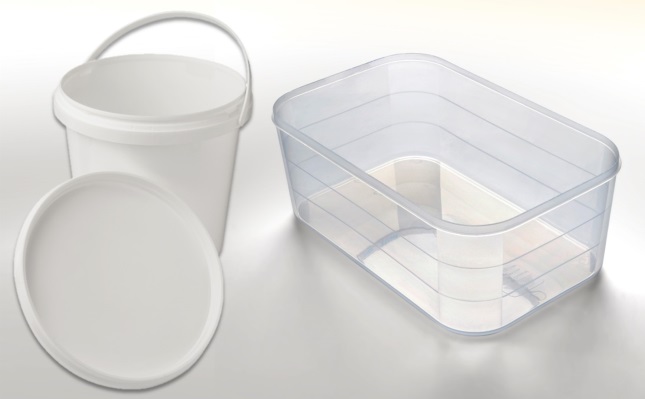
You evaluate stiffness gains by tracking flexural modulus, tensile strength, top-load (compressive) capacity, and heat-deflection temperature (HDT), plus impact and elongation trade-offs. Flexural modulus is reported in MPa/GPa (e.g., unfilled PP ~1.5–2.0 GPa; filled systems can exceed 4 GPa). HDT shifts of +10–30°C at 5–20 wt% filler are common. Use ASTM/ISO methods for repeatable comparison and quantify how much rigidity you gain per weight percent of masterbatch.
- Flexural Modulus and Its Importance in Design
Flexural modulus defines bending stiffness and directly affects part stiffness under load; measure it by ASTM D790. For injection-molded PP parts, increasing modulus from ~2 GPa to 4–6 GPa via 10–30 wt% mineral or glass-filled masterbatch can halve deflection in cantilevered features. You should specify target modulus based on span, load and allowable deflection—components spanning longer distances typically require modulus in the higher GPa range.
- Evaluating Top-Load and Heat-Deflection Characteristics
Top-load (compressive) strength is expressed in Newtons and tested per ASTM D695, while HDT uses ASTM D648/ISO 75 to report the temperature at a set deflection under load. Packaging applications often require 200–600 N top-load and HDT above service temperatures; achieving HDT increases of 10–40°C with 5–30 wt% fillers is typical. Track both metrics to ensure your stiffness gains survive real-world compressive and thermal stresses.
Test parameters matter: specimen geometry, strain rate, and test temperature shift results markedly. You should run compression and HDT tests on molded parts, not only plaques, since orientation and skin-core effects change top-load by 10–30% and HDT by several degrees. Note trade-offs—higher filler loadings that raise HDT and top-load often cut impact toughness (commonly 20–50% reduction), so balance stiffness targets with required drop-weight or Izod performance.
Mastering Formulations: Dosing and Carrier Considerations
You balance active loading, carrier compatibility, and processing window to hit stiffness targets without adding mass. Start with a masterbatch that gives predictable dilution—typical concentrates run 20–50% active—and plan dosing so the final active level stays in the 0.2–3.0 wt% range for most polyolefins; adjust for engineering resins. Match carrier melt behavior and dispersibility to your screw design and cycle time to avoid agglomeration or voids that negate rigidity gains.
- Recommended Dosing Ranges for Optimal Performance
Target masterbatch additions of 1–5 wt% in standard thermoplastics when using 20–50% concentrates, yielding 0.2–2.5 wt% active in the final resin. For high-modulus goals or semi-crystalline polymers, push masterbatch to 5–8 wt% with a higher-active concentrate, monitoring impact strength. For PET or high-temperature resins, keep active below 2 wt% initially and validate at 0.25 wt% increments to avoid processing instabilities.
- Effective Carrier Options for Stiffening Agents
Polyolefin carriers (LLDPE/HDPE) work best for polyolefin end-use, while isotactic PP carriers suit PP matrices; EVA or wax-modified carriers improve dispersion in flexible formulations. For engineering resins, consider PMMA, SAN, or functionalized polyolefins that enhance interfacial adhesion. Choose carriers with melt indices that match your extrusion or injection molds to ensure homogeneous distribution and minimal die build-up.
Case example: dosing a 30% active LDPE masterbatch at 3 wt% into LLDPE (final active 0.9 wt%) raised flexural modulus ~22% without lowering elongation at break significantly. Control carrier selection by matching Tg and processing temperature—use higher-MI carriers for fast-cycle injection molding and higher-melt carriers for extrusion to maintain pellet integrity and dispersion during compounding.
Precision Engineering: Screw Design and High-Mineral Dispersion
Tailor your screw geometry to balance shear for wetting and gentle dispersive mixing to avoid particle breakage; common practice uses twin-screw extruders with L/D ratios of 24:1–40:1 and compression ratios of 2:1–3:1 for 30–60 wt% mineral loading. You can control residence time by adjusting screw speed (typically 50–250 rpm) and incorporate Maddock or pin mixers to boost local shear where needed without raising bulk temperature above the polymer’s melt stability.
- Optimal Screw Designs for Mineral-Heavy Compositions
Choose barrier or co-rotating twin-screw profiles with alternating conveying and kneading blocks to promote distributive mixing; specify backflow-generating reverse elements and 30–60° staggered kneading discs to break agglomerates at 10–30 vol% filler. You should set a feed-throat venting and use segmented screws to allow quick geometry swaps during trials, aiming for melt temperatures within ±5°C of target and melt pressure stability within 10% over run-to-run.
- Tips for Achieving Uniform Dispersion
Start by feeding a concentrated masterbatch (20–50 wt% mineral) via a gravimetric feeder and maintain consistent throughput (±2%) to avoid surges; you can reduce particle agglomeration by pre-drying minerals to <0.1% moisture and using side feeders for hard fillers. Target screw speeds that keep shear energy high enough to deagglomerate—often 80–180 rpm depending on extruder diameter—and monitor torque and melt pressure for dispersion indicators.
- Pre-blend masterbatch pellets with virgin resin at controlled ratios (10–30%) to ease initial dispersion.
- Install a downstream melt filter or breaker plate when fines exceed 500 µm to prevent streaks.
- Use inline torque and melt-pressure logging to detect incomplete dispersion during ramp-up.
- Assume that increasing kneading-disc length by one module raises dispersive work by ~15% and adjust cooling accordingly.
For deeper control, employ alternating dispersive (high-shear, short-gap elements) and distributive (longer, lower-shear elements) sections; you can quantify dispersion with SEM image analysis and melt-rheology—seek particle size distribution narrowing by 30–50% after optimized runs. Adjust barrel temperature profile zone-by-zone, keeping the peak melt zone no more than 10–15°C below the polymer’s degradation onset, and validate with a 30-minute thermal stability test.
- Run short factorial trials (3×3: speed, feed, temperature) and log tensile modulus and surface appearance for correlation.
- Adopt inline VIS/NIR or ultrasonic sensors for real-time homogeneity checks when cycle times are tight.
- Schedule preventative maintenance on feeders and screw flights every 200–500 production hours to avoid buildup.
- Assume that a 1% increase in mineral loading will typically raise melt viscosity by 5–8%, requiring screw-speed or temperature adjustments.
The Balance of Strength: Enhancing Stiffness Without Compromising Impact
- Strategies for Balancing Stiffness and Impact Resistance
You can pair 20–40 wt% glass or mineral fillers (which typically raise modulus 2–4×) with 5–15 wt% core–shell or MBS impact modifiers to recover 40–70% of lost notched Izod energy; adding 0.5–2 wt% nanofillers (clay, CNT) gives a 10–30% stiffness boost with minimal weight penalty. Optimize fiber orientation to load paths, use silane or MAPP sizings for better load transfer, and consider z-pinning or interleaves to preserve through-thickness toughness without bulk increases.
- Understanding Impact Strength Trade-offs
Increasing stiffness often reduces the polymer’s capacity for plastic deformation, so a 30 wt% glass-filled polyolefin can move flexural modulus from ~2 GPa to ~6 GPa while cutting notched Izod from ~10 J to ~4 J under typical lab conditions; failure modes shift toward brittle cracks, fiber–matrix debonding, and rapid crack propagation. Define target Izod/Charpy values early and correlate them with your filler loadings to avoid late-stage surprises.
Deliberate interfacial tuning helps: weakening the interface slightly promotes energy-absorbing debonding and pull-out, while adding 5–15 wt% rubbery modifier often restores 40–80% of impact energy lost to stiffening. Hybrid approaches—combining long fibers for stiffness, short fibers for toughness, and 1–3 wt% nanoscale fillers—let you tailor trade-offs; validate with ISO 180/ASTM D256 impact tests across service temperatures to finalize the blend.
Verifying Success: Laboratory Methods for Performance Validation
Laboratory validation ties mechanical, thermal, and rheological data to your stiffness objectives: run DMA (ASTM D4065) for storage modulus and Tg across -50–150°C, flexural testing (ASTM D790/ISO 178) via 3‑point bend to quantify modulus gains, tensile testing (ASTM D638/ISO 527) for strength and elongation, and MFI/MFR (ASTM D1238/ISO 1133) to confirm processability—compare treated vs baseline at 23°C and report mean ± SD from at least five specimens.
- ASTM and ISO Testing Standards for Stiffening Agents
Key standards you should use include ASTM D790/ISO 178 for flexural modulus (3‑point bend, span‑to‑depth ~16:1), ASTM D638/ISO 527 for tensile properties, ASTM D4065 for DMA to track storage modulus changes, ASTM D1238/ISO 1133 for melt flow, and ASTM D256/ISO 179 or ISO 180 for impact resistance; Vicat softening (ASTM D1525) helps assess heat deflection consequences—report test conditions (temperature, strain rate) alongside results.
- Interpreting Lab Results for Material Improvement
Compare percent change versus baseline: target a 15–30% increase in flexural modulus while keeping tensile strength within ±10% and limiting impact loss to <20%; watch MFI shifts—>10% rise may require processing adjustments; prioritize DMA storage modulus increases above service temperature as a predictor of in‑use rigidity and use statistical tests (t‑test or ANOVA) on ≥5 samples to validate significance.
For example, a 3% stiffening masterbatch in PP often yields ~20–30% higher flexural modulus with MFI changes under 10% and a 10–15% drop in Izod impact; if impact loss exceeds 20% add 2–5 phr impact modifier or reduce filler aspect ratio. Use DMA to identify whether stiffness gains occur in the glassy or rubbery plateau, and require SD <5% across specimens for confident specification limits.
Calculating ROI: Assessing the Cost-Efficiency of Modulus Improvements
Quantify ROI by comparing incremental masterbatch cost to material, processing and warranty savings: a 10% modulus uplift from a 4% masterbatch addition may let you thin walls 8%, saving 0.4 g on a 5 g part—at $1.20/kg resin that’s $0.00048 saved per part; multiply by annual volumes and apply ROI = (annual savings − annualized additive cost)/annualized additive cost to judge value.
- Cost-per-%-Modulus: A Practical Calculator
You calculate cost-per-% as (masterbatch price/kg × addition rate) ÷ % modulus gain. Example: $8/kg masterbatch at 5% addition costs $0.40/kg compound; with a 12% modulus gain cost-per-% = $0.40/12 = $0.033 per % per kg. Multiply that per-kg figure by your part weight (kg) to estimate incremental cost per part versus performance benefit.
- Evaluating the Long-Term Financial Benefits
You assess lifecycle savings including reduced scrap, fewer rejects, lower maintenance and extended tool life: cutting scrap 2% on a 1,000,000 parts/year line at $0.50/part saves $10,000 annually; extending tool life 15% can defer a $50,000 mold replacement by several years—include these cash flows when computing payback and NPV.
You can run a simple payback: if incremental additive cost is $0.012/part and operational savings total $0.03/part, payback is 0.4 years; model NPV using an 8–12% discount rate over product life, run sensitivity cases (±20% resin price, ±30% modulus response) and add secondary credits such as recycling value or 5–15% energy savings to see full financial impact.
Addressing Common Concerns: FAQs on Stiffening Agents
When you assess stiffening masterbatches, focus on compatibility, dosage and processing tradeoffs: typical additions range 1–8 wt% and can raise flexural modulus 10–50% depending on resin and filler; plan DOE runs to dial melt temperature, screw geometry and cooling to avoid sink and warpage; verify recyclability over 2–5 regrinds; quantify color and gloss with spectrophotometry (ΔE <2) before production scale-up.
- Will Utilizing Stiffening Agents Affect Color?
White fillers like talc and CaCO3 tend to lighten L* and reduce saturation, while glass fibers can induce haze and lower gloss; you should expect to adjust pigment masterbatch loadings roughly 5–15% and validate matches with a spectrophotometer to hit ΔE <2; using pre-dispersed color masterbatches, opacifiers, or switching to low-tint fillers minimizes visual shifts—always test at the intended 2–6 wt% loading and part thickness.
- Potential Tooling Wear Issues and Their Management
Abrasive additives and glass fibers accelerate wear at gates, cavities and parting lines; you can mitigate this by specifying hardened tool steels (H13, D2), nitriding or PVD/DLC coatings, and ceramic or sacrificial inserts; control filler release with proper fiber sizing and compounded masterbatches, monitor wear with profilometry, and plan maintenance intervals based on run length and abrasive loading.
Adjust processing to reduce abrasion: lower melt temperature 10–30°C, cut screw RPM/backpressure to reduce shear, and slow injection at gates to minimize particle impingement; adopt barrier or high-dispersion screws, install full-head filtration and wider feed throats to prevent agglomerates, and schedule inspections every 1,000–5,000 cycles for high-volume abrasive formulations while using replaceable gate inserts to simplify maintenance.
Conclusion
Masterbatches of stiffening agents provide a potent means of increasing polymer rigidity while juggling cost, weight, and processability. Manufacturers can obtain notable improvements in flexural modulus, HDT, and top-load performance by differentiating them from fillers and nucleators, maximizing interfacial adhesion, choosing the appropriate resin, and adjusting processing parameters.
Their adaptability is demonstrated in real-world applications, including as automobile panels and thin-wall packaging, when paired with rigorous impact-stiffness trade-offs and standardized testing. Their improved durability and material savings further validate their economic value, according to ROI research. In the end, well-designed formulas provide plastic solutions that are lightweight, cost-effective, and high-performing for a variety of industrial applications.