Table of Contents
Curing Agent Masterbatch offers a crucial solution to the common problem of people looking for efficient ways to improve the properties of polymers. The global masterbatch market size was valued at USD 6.60 billion in 2024 and is expected to grow at a CAGR of 6.6% from 2025 to 2030. This novel method provides ideal crosslinking mechanisms that greatly enhance advanced polymers’ mechanical performance, thermal stability, and chemical resistance. Understanding how curing agents are made and used will help you realize the full potential of polymer materials in a variety of industries, including packaging and the automotive sector. The benefits, varieties, and uses of curing agent masterbatch are examined in this article, giving readers the information they need to make wise choices for their polymer projects.
The Science of Crosslinking: Why It Matters
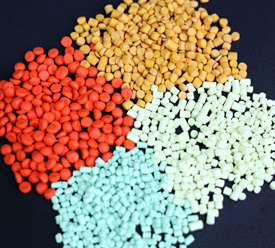
Crosslinking represents a fundamental mechanism that can transform the properties of polymers, enabling them to withstand extreme conditions and perform under demanding applications. This intricate process involves linking polymer chains through covalent or ionic bonds, enhancing the material’s strength, elasticity, and thermal stability. As industries continue to seek materials that excel in performance and durability, understanding the science of crosslinking leads to the development of innovative solutions tailored to meet specific requirements.
- Molecular Foundations of Crosslinking
Molecularly, crosslinking occurs when additional bonds form between polymer chains, effectively creating a three-dimensional network. This bonding can take various forms, including chain extension reactions and bridging agents. The resultant network structure reduces the mobility of polymer chains, leading to an altered molecular architecture that imparts unique characteristics to the material, such as rigidity or flexibility depending on the crosslink density.
- Effects on Polymer Properties
The effects of crosslinking on polymer properties are profound, resulting in enhanced mechanical strength, thermal resistance, and chemical stability. By varying the degree of crosslinking, developers can tailor materials for specific applications, ranging from automotive parts that demand high tensile strength to flexible seals that require elasticity. For instance, rubber undergoes crosslinking via sulfur vulcanization, significantly improving its elasticity while maintaining durability against environmental factors.
Increasing the level of crosslink density directly correlates with an observable shift in properties. For example, a study demonstrated that increasing crosslinking in epoxy resins results in improved heat resistance, making them suitable for electronics where thermal conductivity is important. Furthermore, crosslinked polyethylene (PEX) displays improved resistance to creep and stress cracking, making it a favorable choice for plumbing applications. Such tailored enhancements provide engineers with a broader repertoire of materials that not only meet but exceed industry standards.
Curing Agent Masterbatch: Deriving Performance Enhancements
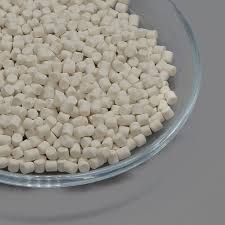
Enhancing polymer performance through curing agent masterbatches integrates a complex blend of chemistry and material science. By optimizing the crosslinking process, manufacturers can achieve significant improvements in mechanical properties, thermal stability, and resistance to environmental factors. The tailored formulations not only streamline production but also promote uniformity across various applications, ultimately leading to higher quality end products.
- Composition and Functionality of Curing Agent Masterbatches
The composition of curing agent masterbatches generally includes reactive monomers, catalysts, and stabilizers that facilitate the crosslinking process. This tailored mix maximizes compatibility with the polymer matrix, reinforcing both strength and durability. As a result, manufacturers can select specific curing agents that align with their desired performance characteristics, thereby enhancing the overall effectiveness of the final product.
- Tailoring Formulations for Specific Applications
Customization of curing agent formulations allows for application-specific enhancements that cater to unique operational demands. For instance, formulations can be adjusted to optimize adhesion in automotive parts or increase flexibility for consumer goods. Such versatility ensures manufacturers can align their products with stringent industry standards and performance expectations.
Further adjustments in the masterbatch formulations can leverage varying ratios of curing agents, add fillers, and modify processing conditions, creating distinct advantages for applications ranging from construction materials to medical devices. For example, a higher concentration of certain curing agents may elevate heat resistance in automotive components, while an increase in flexibility can benefit consumer electronics housings.
Application Insights: Real-World Transformations
Real-world applications of curing agent masterbatches showcase their transformative impact on various industries. By employing this advanced technology, manufacturers experience significant enhancements in product durability, processing efficiency, and overall performance. The flexibility of these masterbatches allows for tailor-made solutions that cater to specific environmental challenges, resulting in materials that not only meet but exceed industry expectations.
- Industry-Specific Use Cases: Automotive to Electronics
Across the automotive and electronics sectors, curing agent masterbatches play a pivotal role in enhancing application performance. In automotive manufacturing, they are utilized to improve weather resistance and impact strength, ensuring longevity and safety in vehicle components. Meanwhile, in electronics, these masterbatches facilitate superior thermal stability and electrical insulation, which are imperative for enduring high-performance electronic devices.
- Comparative Analysis: Masterbatch vs. Traditional Curing Agents
A comparison between curing agent masterbatches and traditional curing agents illustrates significant advantages in composition and performance. Masterbatches offer enhanced processability, reduced dust generation, and more accurate dosing compared to traditional powders, which often require additional handling and mixing. These factors contribute to smoother production workflows and improved final product quality.
Comparative Analysis: Masterbatch vs. Traditional Curing Agents
| Feature | Masterbatch |
| Handling | Minimized dust, easier to process |
| Performance Consistency | Uniform distribution in polymer matrix |
| Efficiency | Faster processing times |
| Environmental Impact | Potential for lower emissions during processing |
This comparative analysis reveals that opting for curing agent masterbatches results in more streamlined operations and enhanced polymer characteristics. The easier handling of masterbatches reduces waste and processing errors, while the uniform distribution within the polymer matrix ensures consistent performance across the board. Moreover, the potential for lower emissions during production aligns with industry efforts towards sustainability, making masterbatches not only a technically superior option but also a more environmentally responsible choice.
The Future Landscape of Polymer Curing Technologies
The advancing landscape of polymer curing technologies promises a shift towards enhanced performance and efficiency. Innovative approaches are emerging, leveraging advanced materials and processes to address the demands of various industries. As manufacturers strive for higher quality and durability, ongoing research and development aim to create more effective curing agents that can adapt to evolving polymer matrices, resulting in stronger and more resilient products.
- Innovations on the Horizon: What’s Next for Curing Agents?
Emerging innovations in curing agents include the exploration of bio-based and synthetic hybrid formulations that enhance thermal stability and reduce energy consumption during curing processes. Advances in nanotechnology are also making waves, with researchers incorporating nanomaterials to improve crosslinking efficiency and expand functionality, ultimately contributing to enhanced mechanical properties and lifespan of polymer products.
- Sustainability Considerations in Crosslinking Solutions
The quest for sustainable materials is driving significant interest in the development of greener curing solutions. These advancements encompass the use of renewable resources and non-toxic components, aiming to minimize environmental impact while maintaining performance standards. Efforts are focused on creating bio-based curing agents that offer a lower carbon footprint without compromising the durability of polymer applications.
Integrating sustainability into crosslinking solutions is becoming increasingly vital as industries face increasing regulatory pressures and consumer demand for eco-friendliness. Companies are investing in research to develop alternative feedstocks for curing agents, such as lignocellulosic biomass, which could substantially reduce reliance on fossil fuels. Recent studies indicate that these bio-derived curing agents can maintain performance characteristics similar to traditional options, affirming that sustainability does not have to come at the expense of quality.
Best Practices for Optimizing Curing Agent Masterbatch Usage
To achieve optimal results in the application of curing agent masterbatches, adherence to best practices is necessary. This includes ensuring uniform dispersion, adjusting processing temperatures, and making precise calculations regarding dosage based on the specific polymer system in use. Proper integration not only enhances performance but also minimizes waste and costs associated with over-application.
- Key Factors for Effective Integration in Production
Effective integration of curing agent masterbatches hinges on several key factors:
- Thoroughly pre-mixing the masterbatch with base polymer to avoid localized curing agents.
- Monitoring the polymer melt temperature to maintain optimal curing conditions.
- Ensuring consistent feed rates during processing for balanced chemical reactions.
- Training personnel on handling and application to minimize errors.
- Troubleshooting Common Issues in Masterbatch Application
Common challenges in the application of curing agent masterbatches often stem from inconsistent quality or improper processing conditions. Observations of bubble formation, uneven surface finishes, or incomplete curing indicate a need for adjustment. Careful adjustments to the formulation or process parameters can mitigate these issues and enhance end-product performance.
Addressing these issues requires a systematic approach, beginning with evaluating the masterbatch quality and ensuring that all components are within spec. For example, checking the compatibility of the curing agent with the polymer can save time during the development phase. Variations in temperature and humidity during processing can also affect the curing process; monitoring and adjusting these conditions will lead to better results. Streamlining operations and training staff on best practices can further minimize the occurrence of these problems in production runs.
Final Words
As a reminder, Curing Agent Masterbatch enhances polymer performance through optimal crosslinking solutions. They provide a versatile approach to improving the mechanical and thermal properties of various polymer formulations. Emphasize that by utilizing the right curing agents, manufacturers can significantly extend the lifespan and functionality of their products. Point out that these advanced solutions are vital for industries requiring high-performance materials, ensuring reliability and efficiency in demanding applications. Overall, they serve as a pivotal element in modern polymer technology, driving innovation and excellence.